

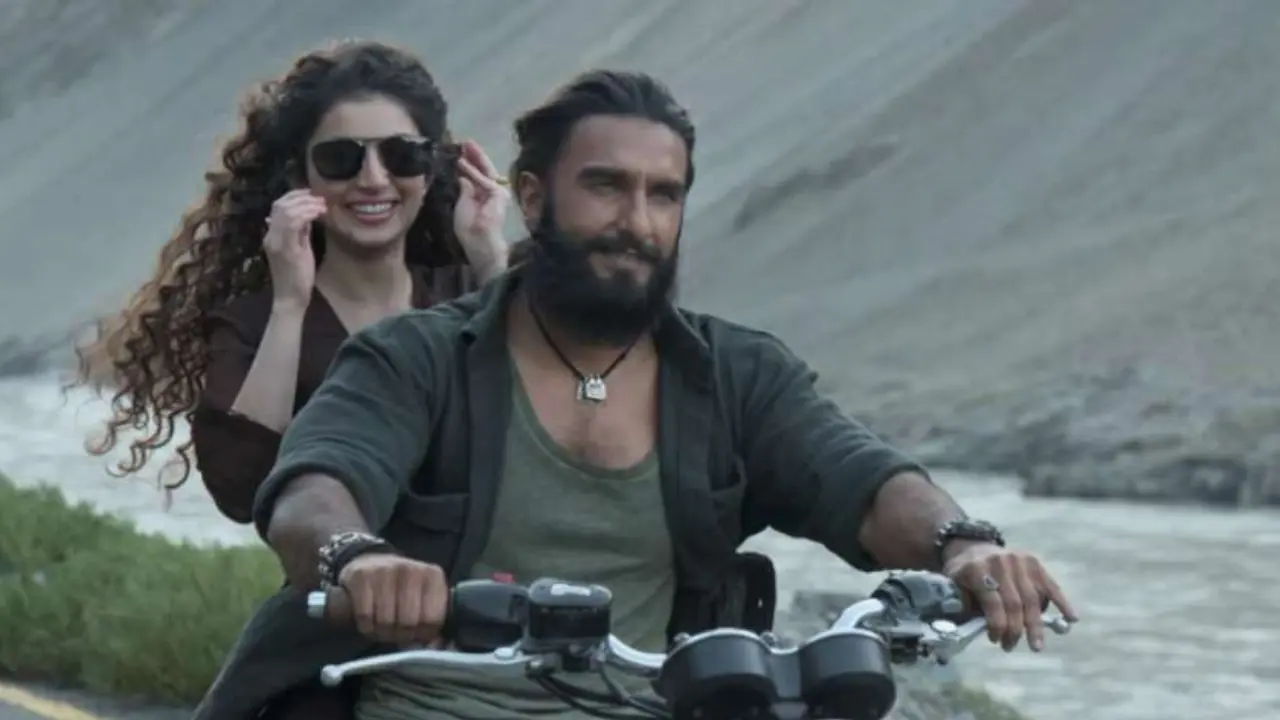
Recent reports suggested that Aditya Dhar’s highly anticipated sequel, Dhurandhar: The Revenge, had received clearance from the censor board. A CBFC certificate circulating on social media led many to believe the film was good to go. However, it has now come to light that the film has not yet been approved, and the certificate in question pertains to the original Dhurandhar.
According to an India Today report, sources have clarified that the certification making waves online is actually for the television premiere of the first film, which hit theaters on December 5, 2025. In contrast, the sequel is set for a theatrical release on March 19 and is still awaiting censor board approval.
Additionally, it was noted that the team behind Dhurandhar 2 has yet to submit the film for certification. The production was ongoing as recently as last week. The viral certificate, dated February 9, mentions only ‘Dhurandhar’, explicitly indicating it belongs to the original film, not its sequel.
Compounding the confusion, the runtime listed in this new certificate is shorter than that of the theatrical release of Dhurandhar. The first installment originally ran for 3 hours and 34 minutes but was edited down to 204 minutes after the Baloch community raised concerns about misrepresentation. Following these edits, the film was recertified just before its OTT debut last month. The television version has been trimmed further—by nearly a minute—to comply with broadcast standards, resulting in a U/A 16+ certificate. Unlike its theatrical and OTT counterparts, which received an A certificate, the TV adaptation has undergone necessary edits to mute certain expletives and remove sequences deemed inappropriate for younger audiences.
As for Dhurandhar, the film boasts a star-studded cast that includes R. Madhavan, Akshaye Khanna, Sanjay Dutt, and Arjun Rampal. This first installment of a planned two-part series focuses on a high-stakes covert counter-terrorism mission. It depicts the journey of an undercover Indian intelligence agent who navigates Karachi’s criminal underbelly and political landscape to dismantle a terror network targeting India. The narrative loosely draws inspiration from real-life geopolitical events in South Asia, including the 1999 IC-814 hijacking, the 2001 Indian Parliament attack, the 2008 Mumbai attacks, and elements related to Pakistan’s Operation Lyari.