

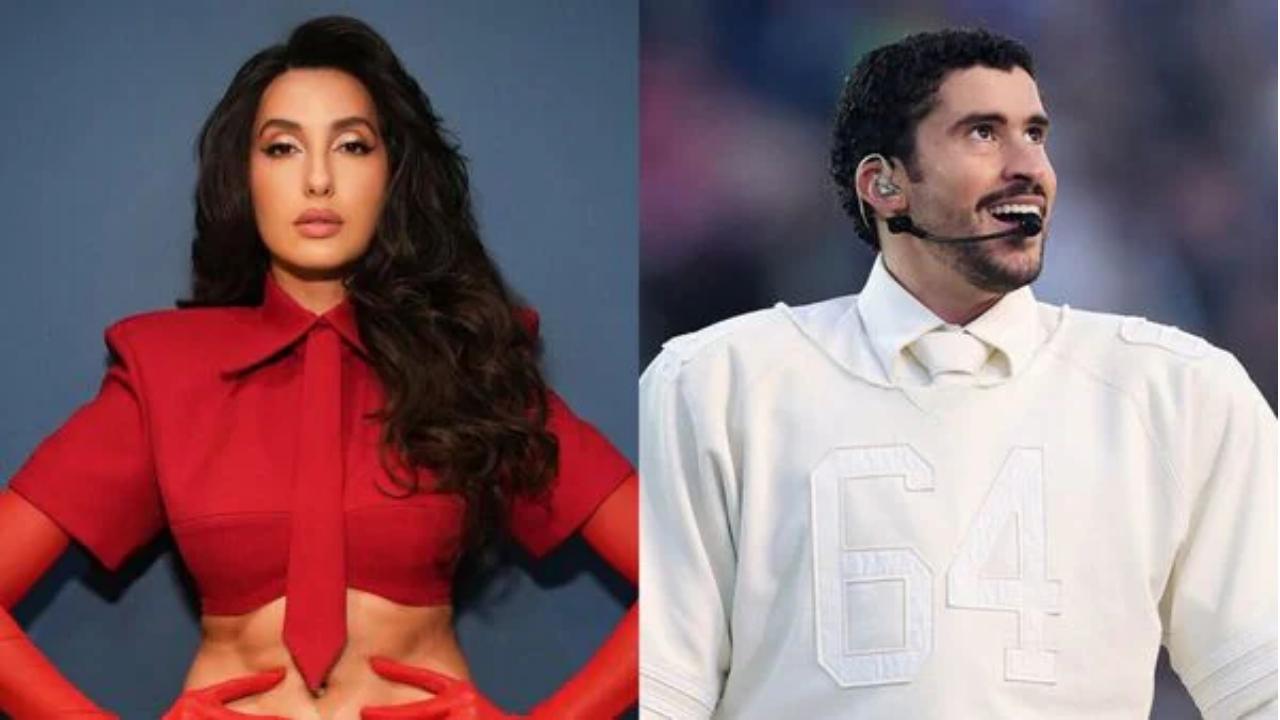
Bollywood star and dancer Nora Fatehi has openly expressed her admiration for global icon Bad Bunny following his Super Bowl LX halftime performance, which elicited a whirlwind of reactions. Taking to her social media, she shared a heartfelt video, revealing that Bad Bunny’s performance resonated with her deeply, even bringing her to tears. This response came in the wake of diverse opinions from audiences and critics worldwide regarding the historic event.
Nora Fatehi’s Support
The Super Bowl halftime show, one of the year’s most anticipated musical spectacles, marked Bad Bunny as the first solo artist to headline with a predominantly Spanish-language set. His performance celebrated cultural pride and unity, showcasing vibrant choreography, stunning visuals, and guest appearances by other renowned artists, generating conversations about its emotional depth.
While many fans and celebrities praised the performance for its artistic merit and cultural significance, reactions were notably polarized. Some lauded the heartfelt message of unity and the celebration of Latin heritage, whereas others critiqued the language and stylistic choices for a mainstream American audience. Notably, former U.S. President Donald Trump was among the vocal detractors, expressing his disapproval in strong terms.
Fatehi’s endorsement highlights the positive sentiments shared by many viewers who felt the performance transcended language barriers, connecting with audiences on a profound emotional level. She emphasized that the artistic and emotional influence of the show overshadowed the criticism, reinforcing the notion that music can resonate deeply, regardless of linguistic or cultural differences.
Insights on Bad Bunny’s Performance
The discussion surrounding Bad Bunny’s performance extended beyond the event itself. Following the show, he deleted all posts from his Instagram account, sparking further speculation and intrigue among fans, with some interpreting it as a strategic reset or a creative statement post-performance.
Ultimately, Fatehi’s heartfelt message contributes to the broader dialogue about cultural representation in global entertainment and the unique ability of music to evoke emotions across various audiences.